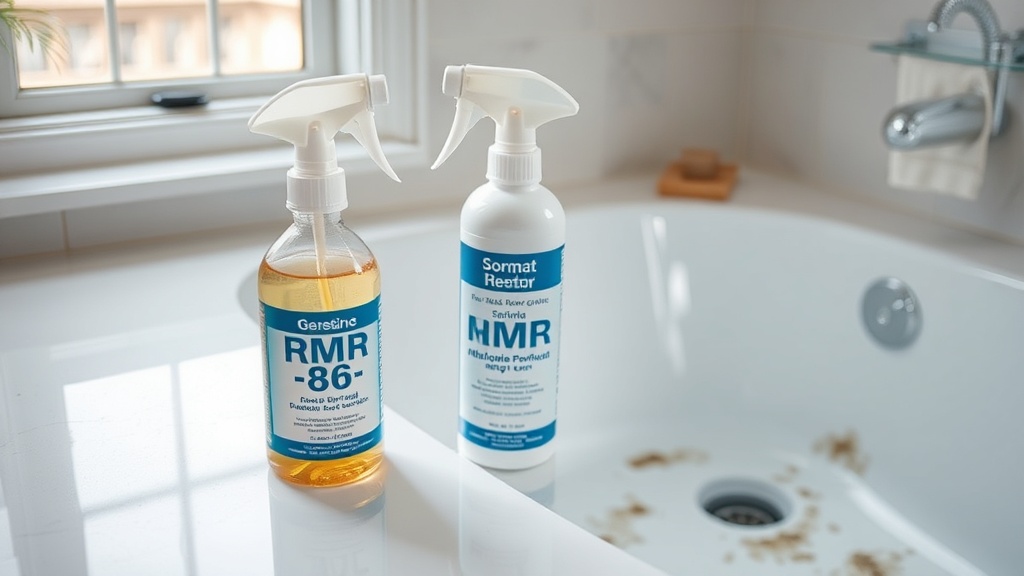
How to Use RMR-86 on Acrylic Tub Mold Stains: A Step-by-Step Guide
Acrylic tubs offer a sleek, non-porous surface that resists moisture, but persistent mold stains can still develop in corners or around caulking. RMR-86, a professional-grade stain remover, is highly effective on acrylic without causing damage when applied correctly. This guide provides a detailed, safe process for removing mold stains from acrylic tubs, ensuring long-lasting results.
What Makes RMR-86 Suitable for Acrylic Tub Surfaces?
RMR-86 utilizes a concentrated formula that penetrates and lifts mold stains without harsh abrasives. Unlike bleach-based cleaners that can yellow acrylic, RMR-86’s oxidizing agents break down organic mold stains while preserving the tub’s glossy finish. The product is pH-balanced and non-scratching, making it safe for use on acrylic, fiberglass, and other sensitive surfaces. For a direct comparison with other spray-on mold removers, see our RMR-86 vs Mold Armor FG502 Spray: Which Stain Remover Is Best? article.
Acrylic tubs are prone to microscratches from abrasive cleaners, which can trap moisture and promote regrowth. RMR-86’s liquid formulation avoids this issue, as it works chemically rather than mechanically. The product is also effective on soap scum and mineral deposits that often accompany mold stains in bathrooms.
How Do You Prepare the Acrylic Tub for RMR-86 Treatment?
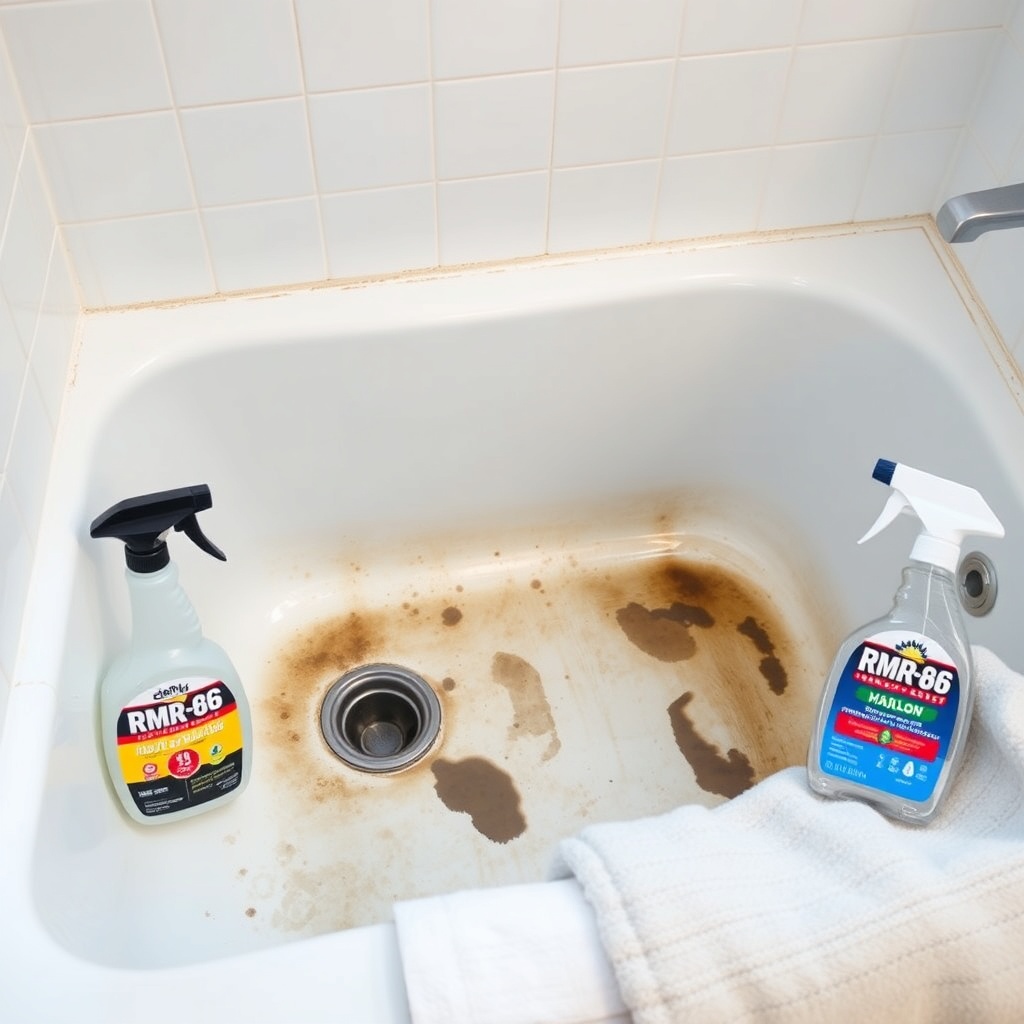
Before applying RMR-86, ensure the tub is clean of loose debris and soap residue. Rinse the tub thoroughly with warm water and dry with a microfiber cloth—acrylic surfaces should be completely dry for optimal product adhesion. Remove any shower curtains or mats to avoid staining, and open a window or turn on an exhaust fan for ventilation. Wear rubber gloves and safety goggles to protect skin and eyes from the active ingredients.
Test RMR-86 on an inconspicuous area, such as the tub’s edge, to confirm colorfastness. Wait 10–15 minutes, then rinse and inspect for any reaction. Acrylic is generally stable, but older tubs with worn coatings may react differently. If the test area appears unchanged, proceed with the full treatment.
What Is the Step-by-Step Application Process for Mold Stains?
Follow these steps for effective mold stain removal without damaging the acrylic surface:
- Apply RMR-86 directly to the mold stains using the spray nozzle. Hold the bottle 6–8 inches from the surface for even coverage.
- Allow the product to sit for 5–15 minutes. Do not let it dry completely—if the solution evaporates, reapply to keep the area wet.
- Scrub gently with a soft sponge or non-abrasive brush (avoid steel wool or scrub pads). Focus on stained areas with circular motions.
- Rinse thoroughly with warm water. Use a handheld showerhead or a bucket to remove all residue.
- Inspect for remaining stains. For stubborn spots, repeat the process with a longer dwell time (up to 30 minutes) or a second application.
- Wipe the tub dry with a clean microfiber cloth to prevent water spots.
For heavy infestations where mold has penetrated deep into surface pores, consider using a Best HEPA Vacuum for Cleaning After RMR-86 Treatment to remove loosened spores. This step reduces airborne spores during cleanup.
What Are the Dwell Time and Safety Precautions for Acrylic?
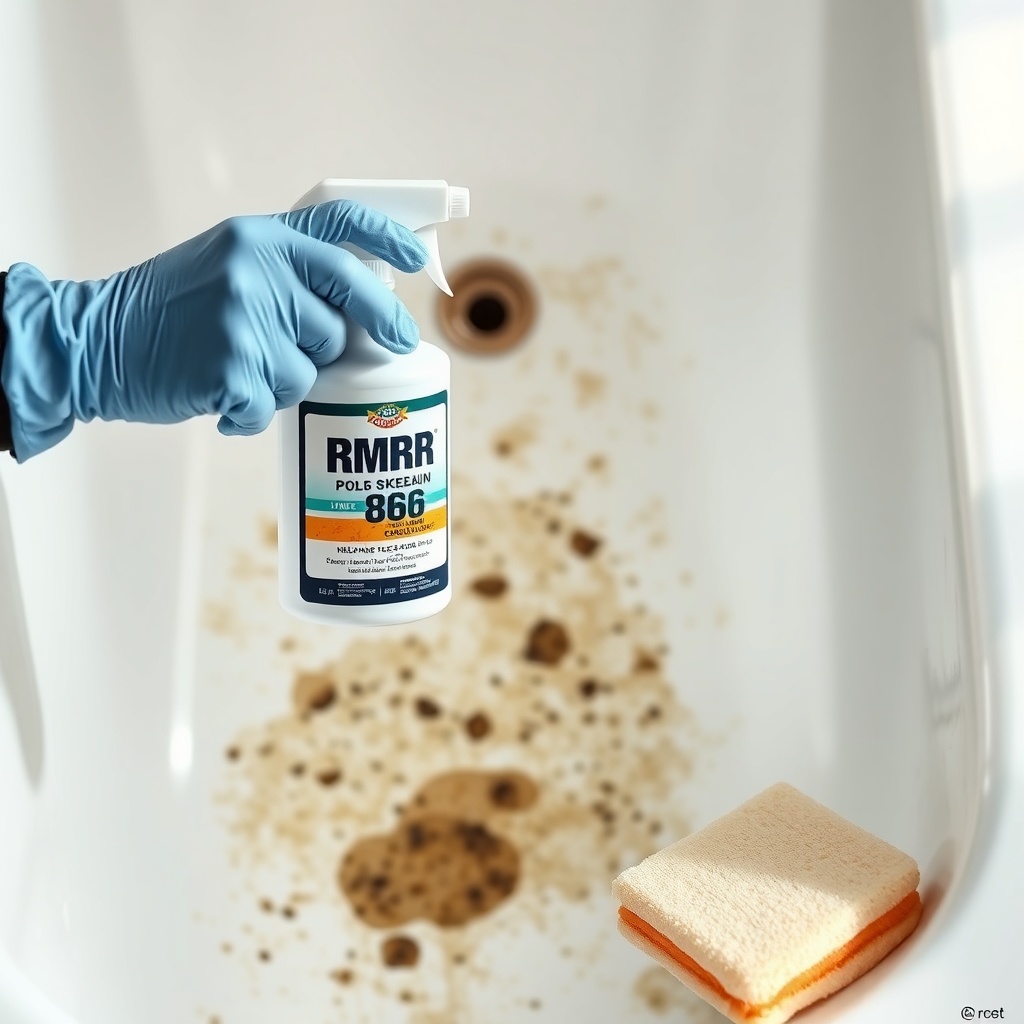
RMR-86 is fast-acting, but acrylic requires careful timing to avoid prolonged exposure. For light surface stains, 5 minutes is sufficient; for deep-set or black mold stains, extend to 15 minutes. Never leave the product on for more than 30 minutes, as extended contact can degrade the acrylic’s protective topcoat. Always test on a hidden area first if the tub is older or has existing damage.
Safety precautions include wearing protective gear, ensuring ventilation, and keeping children and pets away during application. RMR-86 contains sodium hypochlorite (bleach) and other oxidizing agents; avoid mixing with ammonia or acidic cleaners. In case of skin contact, rinse immediately with water. For eye contact, flush with water for 15 minutes and seek medical advice.
How Can You Compare RMR-86 with Other Mold Removers for Acrylic?
Below is a table comparing RMR-86 with common alternatives for acrylic tub mold removal. Prices are in USD based on average retail values.
| Product | Active Ingredients | Dwell Time (minutes) | Acrylic Safety | Price (per 32 oz) |
|---|---|---|---|---|
| RMR-86 | Sodium hypochlorite, detergents | 5–15 | Safe with test | $14.99 – $19.99 |
| Mold Armor FG502 | Sodium hypochlorite, surfactants | 15–30 | Safe but may yellow | $9.99 – $12.99 |
| Concrobium Mold Control | Sodium carbonate, trisodium phosphate | 10–20 | Safe for acrylic | $11.99 – $15.99 |
| Bleach (household 3%) | Sodium hypochlorite (3%) | 10–30 | Can yellow over time | $1.50 – $3.00 |
RMR-86 offers a balanced solution with shorter dwell times and low risk of yellowing if used correctly. For grout stains in shower tile, see How to Use RMR-86 on Shower Tile Grout: A Step-by-Step Guide for a dedicated approach.
What Do Owners Say About Using RMR-86 on Acrylic Tubs?
User reviews across home improvement forums and product sites highlight consistent satisfaction. One homeowner in Florida reported that RMR-86 removed a 5-year-old black mold stain from their acrylic tub in two applications, with no damage to the surface. Another user noted that the product was effective on stubborn stains around the drain, where other cleaners failed. Some owners recommend pairing it with a soft-bristle brush for better penetration in textured areas.
However, a few users mention that the bleach smell can be strong, requiring good ventilation. One reviewer shared that leaving the product on for 20 minutes caused a slight haze on their tub, emphasizing the importance of adhering to recommended dwell times. For post-treatment humidity control, many suggest a Best Dehumidifier to Use After RMR-86 Treatment: A Complete Guide to prevent mold regrowth. Overall, the product earns a 4.5-star average rating for acrylic use, with particular praise for its stain-lifting power.
Are There Any Rinse and Dry Steps After Application?
Yes, thorough rinsing is critical. After the dwell time, use a handheld showerhead or a bucket to flush the tub with warm water. Rinse at least twice to remove all chemical residue, which can attract dirt or cause discoloration if left behind. For best results, wipe the tub dry with a clean microfiber cloth immediately after rinsing. This step prevents water stains and ensures the acrylic’s shine is restored.
If any product drips onto surrounding tiles or grout, rinse those areas promptly. For grout stains, refer to How to Use RMR-86 on Shower Tile Grout: A Step-by-Step Guide for targeted methods. Finally, run the shower for a few seconds to clear any residual chemicals from the faucet.
How Can You Prevent Future Mold Stains on Acrylic Tubs?
Prevention involves reducing moisture and cleaning regularly. After each bath, squeegee the tub walls and use a towel to dry corners and edges. Install an exhaust fan or use a dehumidifier to keep bathroom humidity below 50%. For persistent mold, apply a mildew-resistant sealant around the tub’s perimeter annually. Avoid storing wet sponges or cloths on the tub surface, as those can harbor spores.
Following RMR-86 treatment, cleaning weekly with a mild, non-abrasive cleaner helps maintain the acrylic’s finish. For outdoor vinyl siding with similar mold issues, see Using RMR-86 on Vinyl Siding: A Complete Guide for expanded use cases.
Frequently Asked Questions
Can RMR-86 be used on acrylic tubs without damaging the finish?
Yes, when used as directed with a test spot, RMR-86 is safe for acrylic. Avoid scrubbing with abrasive materials and keep dwell times under 15 minutes to prevent damage.
How long should I leave RMR-86 on an acrylic tub mold stain?
For most mold stains, 5–10 minutes is adequate. Stubborn stains may require up to 15 minutes, but never exceed 30 minutes.
Will RMR-86 remove soap scum and hard water stains on acrylic?
Yes, the formulation is effective on soap scum and mineral deposits. For heavy buildup, apply and let sit for 10 minutes before gently scrubbing.
What should I do if RMR-86 leaves a haze on my acrylic tub?
Haze may result from leaving the product on too long. Rinse thoroughly with vinegar-diluted water (1 part vinegar to 3 parts water) to neutralize residue, then buff with a dry microfiber cloth.
Is RMR-86 safe for use around acrylic tub faucets and drains?
Yes, but rinse metal fixtures immediately after contact to avoid corrosion. Avoid soaking rubber drain gaskets for extended periods.
Can I use RMR-86 on colored acrylic tubs?
Test on a hidden area first. While generally safe, colored acrylics may have different surface coatings. If color remains unchanged after the test, it is safe to use.