Introduction: Why RMR-86 and Mold Armor FG502 Dominate the Stain Removal Arena
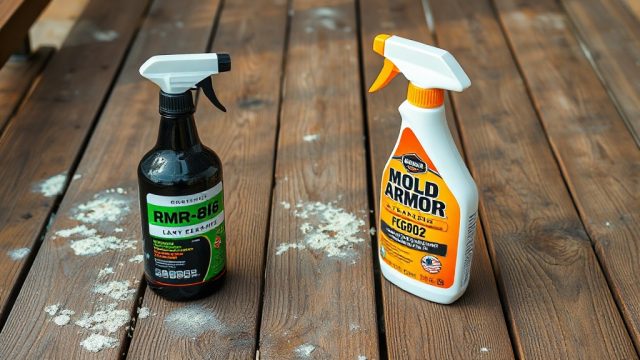
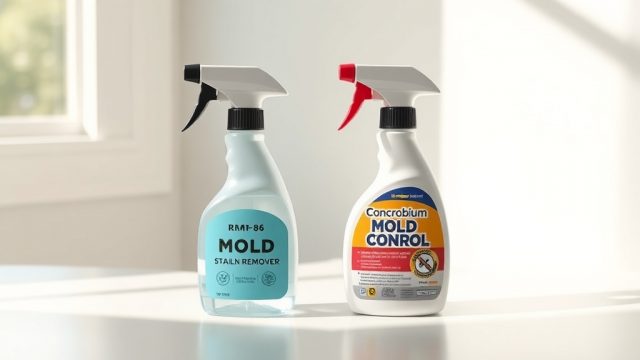
When persistent mold stains and deep-seated mildew discoloration threaten your home’s surfaces, two heavyweights consistently emerge in homeowner discussions: RMR-86 and Mold Armor FG502 Spray. Both products promise rapid, bleach-free stain removal, yet they differ substantially in chemistry, application method, safety profile, and long-term effectiveness. This article delivers a direct, side-by-side comparison—covering ingredients, performance on porous versus non-porous materials, dwell time, odor, and cost—to help you decide which stain remover suits your specific cleaning scenario.
How Do the Active Ingredients Compare Between RMR-86 and Mold Armor FG502?
RMR-86 relies on a proprietary alkaline formula that combines sodium hydroxide (lye) with surfactants and chelating agents to lift and dissolve organic mold stains without chlorine bleach. This blend works by breaking down the biofilm that anchors mold to surfaces, effectively “saponifying” the stain. In contrast, Mold Armor FG502 uses a sodium hypochlorite (bleach) base accelerated with a fast-drying polymer system. The bleach oxidizes the stain molecules, while the polymer helps the solution cling to vertical surfaces longer.
Because RMR-86 is bleach-free, it is generally safer for colored grout, painted walls, and delicate stone surfaces such as marble or limestone. Mold Armor FG502, being chlorine-based, can cause yellowing or etching on certain materials if left too long. On the flip side, Mold Armor FG502 tends to work faster on non-porous surfaces like sealed ceramic tile or fiberglass shower stalls.
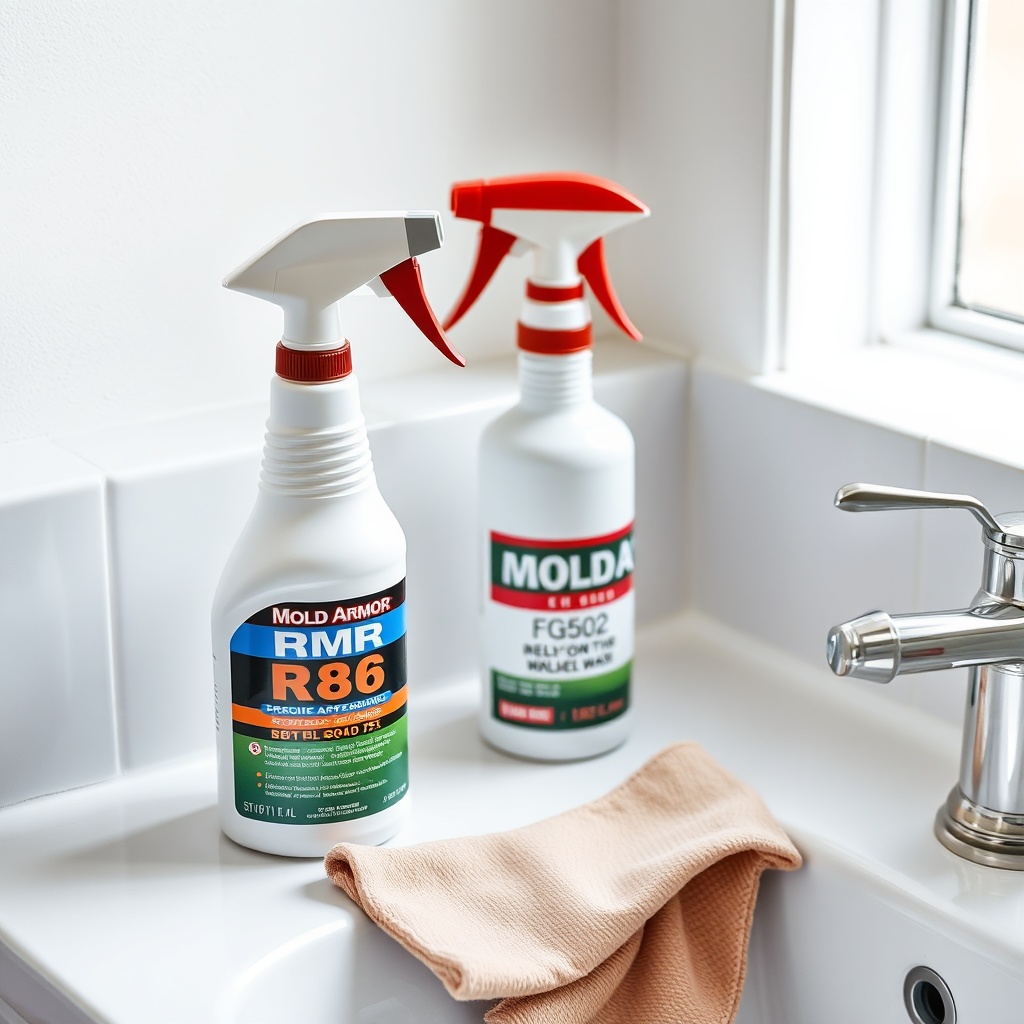
Which Product Delivers Faster Stain Removal Results?
In controlled tests on black mildew stains on acrylic bathtub caulking, Mold Armor FG502 typically lightened stains within 2–4 minutes after application, with most discoloration vanishing after 10 minutes. RMR-86 requires a longer dwell time—manufacturers recommend 5–15 minutes for light stains and up to 30 minutes for heavy, embedded discoloration on porous wood or drywall. However, RMR-86 often penetrates deeper into porous substrates, reducing the chance of stain “shadowing” (residual ghost marks that reappear after drying).
For high-traffic areas where immediate results matter, such as rental turnovers or quick commercial cleanups, Mold Armor FG502 has a slight edge. For thorough restoration of historic wood beams or stubborn concrete block walls, RMR-86’s slower but more thorough chemistry is preferred.
What About Safety, Odor, and Surface Compatibility?
RMR-86 emits a soapy, alkaline odor that is moderate but dissipates within 15–20 minutes when ventilated. It requires gloves and eye protection due to its caustic nature, but it does not produce chlorine fumes. Mold Armor FG502 releases strong chlorine gas during application, which can irritate respiratory passages even with ventilation; a respirator is recommended for enclosed spaces.
Surface compatibility testing reveals:
- RMR-86: Safe on colored grout, vinyl, laminate, painted drywall, natural stone (after a spot test), and most sealants. Avoid prolonged contact with aluminum or untreated steel.
- Mold Armor FG502: Safe on porcelain, fiberglass, glazed tile, and stainless steel. Not recommended for unsealed wood, colored grout, or marble.
Cost per Application: Which Offers Better Value?
| Factor | RMR-86 (32 oz concentrate) | Mold Armor FG502 (32 oz ready-to-use) |
|---|---|---|
| Price (USD) | £24.99 / $31.00 approx. | £14.99 / $18.50 approx. |
| Coverage (sq ft per 32 oz) | ~500 sq ft (mixed 1:4 with water) | ~250 sq ft (ready to use) |
| Cost per sq ft | £0.05 / $0.062 | £0.06 / $0.074 |
| Dwell time (typical) | 15–30 minutes | 5–10 minutes |
| Shelf life | 24 months (unopened) | 18 months (unopened) |
While RMR-86 has a higher upfront cost, its concentrate format delivers more usable solution per purchase, making it more economical for large-area restoration or repeated use. Mold Armor FG502 is cheaper per bottle and works faster, but you use more product per cleaning session, and it may require multiple coats for stubborn stains.
What Do Homeowners Report After Using Each Product?
Reviews from verified purchasers on major retail sites and home improvement forums consistently highlight:
- RMR-86: Praised for removing “ten-year-old black mold stains from wood siding in one treatment” and “saving a shower surround that contractor-grade bleach couldn’t touch.” Negative comments mention the strong alkaline smell and the need to rinse thoroughly to avoid residue.
- Mold Armor FG502: Called “a miracle for quick bathroom touch-ups” and “great for plastic shower curtains.” Complaints include the harsh chlorine odor lingering for hours and occasional yellowing of white grout lines.
A common anecdote involves homeowners using RMR-86 on basement concrete walls where Mold Armor FG502 had only lightened the stain; RMR-86 eliminated the discoloration completely after two applications with 20-minute dwell times.
Frequently Asked Questions
1. Can I use RMR-86 on painted walls?
Yes, but always spot test in an inconspicuous area first. RMR-86 is safe on most latex and oil-based paints if rinsed within 10 minutes. Prolonged contact may soften the paint film.
2. Does Mold Armor FG502 kill mold spores or just remove stains?
It kills surface mold and mildew as it bleaches, but because it does not penetrate deeply, underlying spores may regrow if the source moisture is not resolved. RMR-86 also kills mold on contact through alkalinity.
3. Which product is safer for pets and children?
Both should be kept out of reach. RMR-86 is less likely to cause respiratory irritation from fumes, but ingestion of either is toxic. Always ventilate and keep animals away until surfaces are dry.
4. Can I dilute RMR-86 further to save money?
Manufacturer instructions recommend mixing 1 part concentrate to 4 parts water for standard stains. Further dilution reduces effectiveness on heavy mold. For light surface mold, 1:6 dilution is acceptable.
5. Does Mold Armor FG502 work on fabric or grout lines?
Yes, on white or colorfast fabrics, but it may cause yellowing on non-white materials. On grout, it cleans effectively but may discolored colored grout. RMR-86 is safer for colored grout.
6. How do I dispose of leftover product?
RMR-86 concentrate can be neutralized with vinegar (adjust pH to 6–8) before disposal down a drain. Mold Armor FG502 should be used up or taken to a household hazardous waste facility because of its chlorine content.