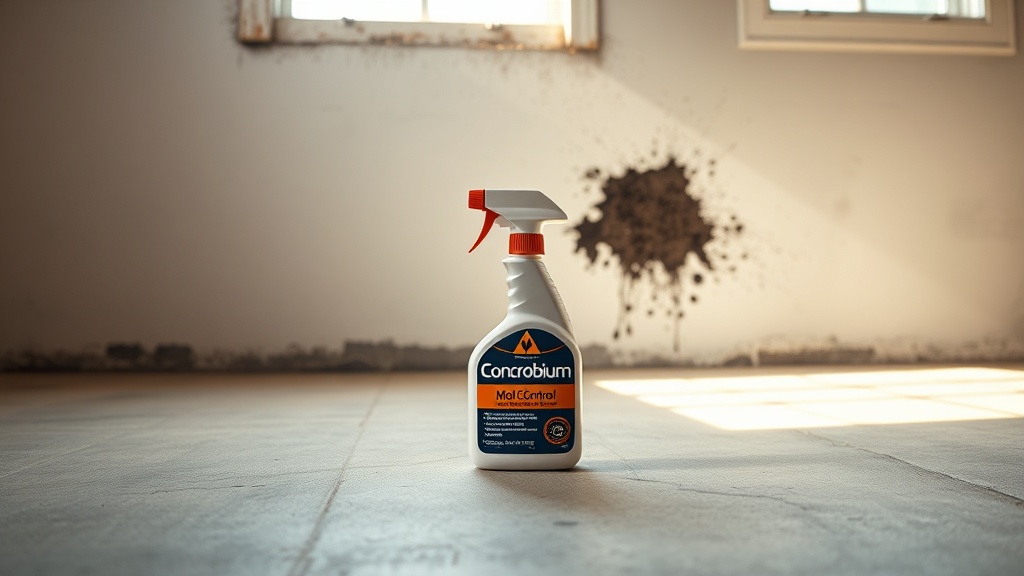
How to Remove Basement Mold with Concrobium Mold Control: DIY Guide
Basement mold is a common frustration for homeowners, but tackling it doesn’t always require expensive professionals. Concrobium Mold Control offers a practical, EPA-registered solution for cleaning and preventing mold on porous and non-porous surfaces in unfinished basements, crawl spaces, and storage rooms. This guide walks you through the entire process—from assessing the severity of the growth to applying Concrobium safely and effectively as part of a regular DIY maintenance routine.
What Makes Concrobium Mold Control Different from Bleach for Basement Mold?
Unlike bleach, which merely whitens mold stains and can damage basement surfaces like drywall, wood, and concrete, Concrobium works through a patented “encapsulation” technology. Its active ingredient, sodium carbonate (washing soda), combined with sodium bicarbonate (baking soda) and a surfactant, physically cracks and erodes the mold cell structure on contact. The solution then leaves behind a thin, invisible barrier that resists future mold growth as long as it remains undisturbed. This means no harsh fumes, no bleaching of adjacent materials, and a treatment that continues working after it dries. For basements with high humidity and limited ventilation, this barrier is a significant advantage over bleach, which loses efficacy once it evaporates.
When applying Concrobium, you’re not just cleaning visible mold—you’re treating the underlying porosity of concrete, brick, or unpainted wood. This makes it particularly effective for the musty, damp conditions typical in basements. However, it is not a sealer for active leaks; address any water intrusion before starting treatment.
How Do I Assess the Severity of Basement Mold Before Using Concrobium?
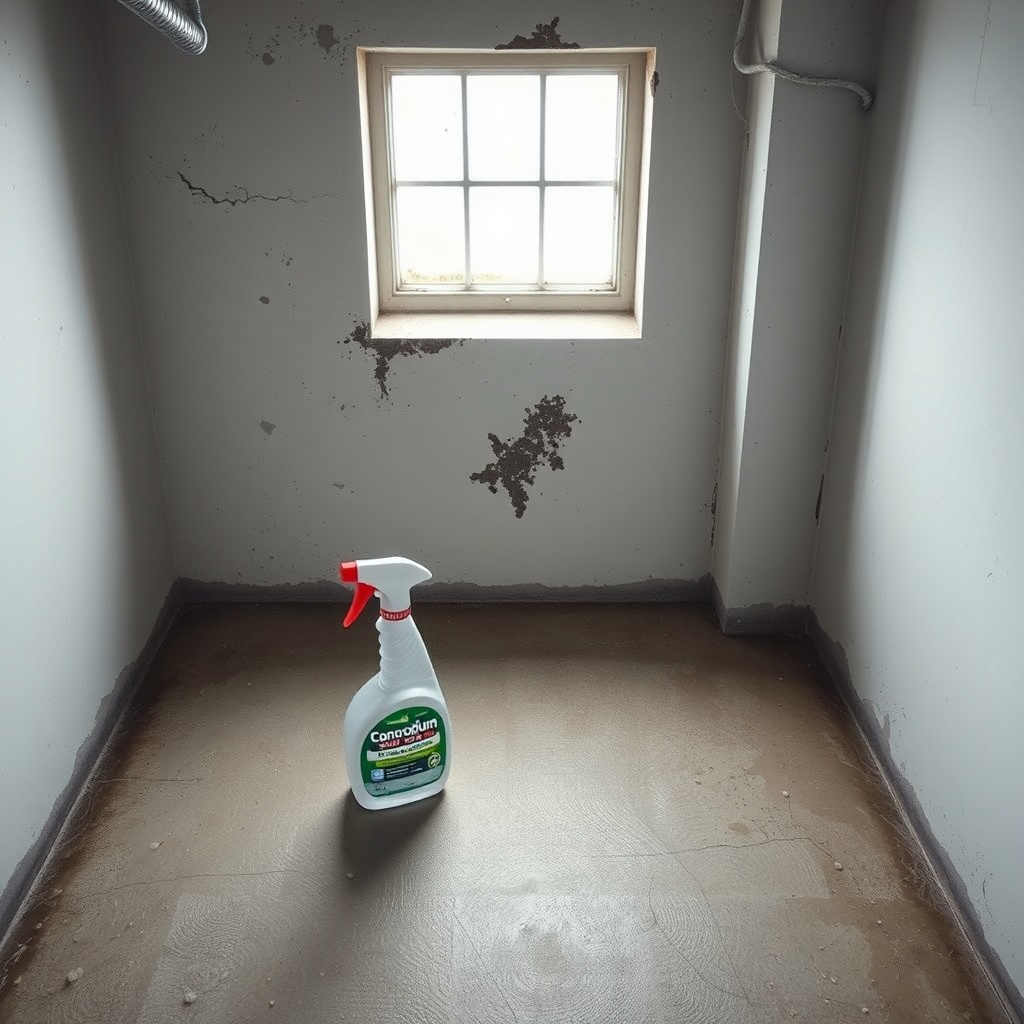
Before reaching for the spray bottle, determine whether the mold situation is manageable as a DIY project or requires professional intervention. Concrobium is effective for areas up to about 10 square feet of growth—the threshold recommended by the EPA for homeowner handling. Larger infestations, especially those caused by untreated sewage backups or flooding, call for an abatement specialist.
Use the following severity table to guide your decision:
| Severity Level | Characteristics |
|---|---|
| Can Typically Be Handled with DIY Concrobium | Patchy black or green mold on concrete, block walls, painted drywall, or wood studs covering less than 10 sq ft. Surface mold on stored items like cardboard boxes or clothing. Visible moisture from condensation or minor leaks that have been fixed. Mold only on non-porous surfaces like tile or glass block. |
| Needs Professional Assessment or Abatement | Mold covering more than 10 sq ft. Mold on structural elements like load-bearing beams with deep saturation. Musty odor persisting after cleaning. Suspected hidden mold behind walls or under flooring. Any mold following a sewage backup or floodwater. Residents with asthma, allergies, or compromised immune systems. |
In borderline cases, you can use a simple moisture meter (under £40 at UK hardware stores) to check if wood or drywall is above 20% moisture content—if so, drying must happen before Concrobium treatment. Consider testing for hidden mold with the Concrobium Mold Control with Test Kit: Complete Review to ensure you’re not missing growth behind baseboards or panelling.
What Safety Precautions Are Needed for DIY Basement Mold Removal with Concrobium?
Even though Concrobium is low-toxicity, safety first. Begin by sealing off the work area with plastic sheeting and tape to prevent spores from drifting into living spaces. Wear an N95 or N100 respirator, safety goggles, disposable gloves, and a long-sleeved shirt and trousers. Do not use a standard dust mask—mold spores are microscopic. Open a basement window if one exists, or place a box fan blowing outward in a window well to create negative pressure.
Remove all furnishings, cardboard boxes, and porous items from the area. Anything you plan to keep must be vacuumed with a HEPA vacuum outside the basement. Concrobium will not kill mold spores embedded deep inside soft furnishings—discard heavily mold-infested carpets, mattresses, and particleboard shelving.
For electrical outlets or switches near mold, turn off the circuit and cover with plastic wrap. Avoid spraying directly into open junction boxes. If you encounter significant water damage, treat the area after it completely dries—Concrobium won’t adhere to dripping wet surfaces.
How Do I Apply Concrobium Mold Control to Basement Walls and Ceilings?
Application is straightforward but requires patience. Start by vacuuming loose mold spores and debris from the affected surfaces using a HEPA vacuum—never a standard shop vac, which can blow spores back into the air. Next, shake the Concrobium bottle well, attach the spray nozzle, and saturate the moldy area until the solution pools slightly. Do not wipe it off. Allow it to dwell for 15–20 minutes. You will see the black or green discoloration begin to lift as the solution breaks down the mold.
After the dwell time, scrub the area gently with a stiff-bristled brush or sponge. For textured concrete or brick, use a nylon brush to work the solution into crevices. Rinse the brush frequently in clean water. Once scrubbed, spray a second coat of Concrobium onto the same area and let it air-dry completely—typically 2–4 hours depending on humidity. This second coat is the barrier that prevents regrowth.
For porous surfaces like unpainted concrete or raw wood, you may need a third application for deep saturation. If you are treating a ceiling, use a paint roller to apply Concrobium to avoid excess dripping. For areas above 8 feet, a pump sprayer (available at garden centres for around £25) makes the job faster and more even.
Allow the treated area to dry for at least 24 hours before painting or applying any other coating. If you plan to finish the basement later, consider pairing this treatment with an appropriate air cleaner—see our guide on the Best Air Purifier to Pair with Concrobium Mold Control Treatment for maintaining air quality during the drying process.
How Long Does Concrobium Mold Control Last After Application in a Basement?
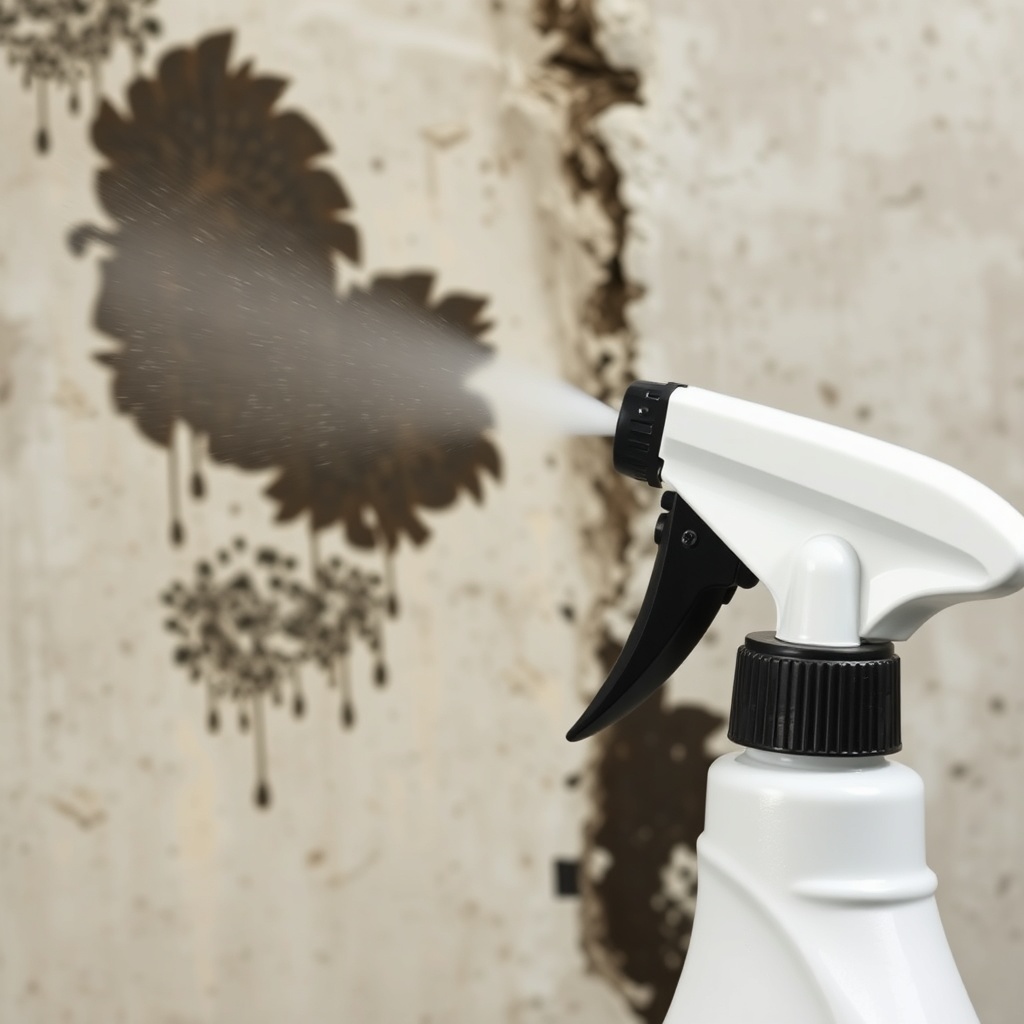
The residual barrier from Concrobium is not permanent. In a finished basement with moderate humidity (50–60% RH), the barrier can last 12–18 months before needing reapplication. In an unfinished, damp basement with humidity above 65%, the barrier may degrade in 6–9 months—particularly if there is frequent condensation on walls or floors. The product is not a sealant; if water seeps through the concrete or drywall, it can wash away the barrier over time.
To maximise longevity, address the source of moisture first. In basement settings, this often means installing a dehumidifier (aim for RH below 55%), sealing cracks in the foundation, and ensuring gutters and downspouts direct water at least 6 feet away from the house. The barrier is also physically removed if you scrub the treated surface with bleach or harsh cleaners—avoid these after application.
Concrobium’s manufacturer recommends quarterly inspections of basements treated with the product. Look for any new staining, powdery residue, or musty odour. If you notice these, spray a light mist of Concrobium directly onto the area without scrubbing—the barrier can be reactivated with a fresh coat. For ongoing maintenance, reading the full Concrobium Mold Control Review: Does It Really Kill Mold? will help you understand long-term performance in various basement conditions.
What Owners Say
Feedback from homeowners who have used Concrobium in basements is largely positive, with a few practical notes. One user from a 100-year-old row house in Manchester reported that after scrubbing an old plaster ceiling with Concrobium, the mold did not return for 14 months, despite an unsealed cellar floor. He emphasised that the second coat was essential—on his first try, he only applied one coat and saw regrowth within four months. Another owner in a modern basement with a humidity issue noted that Concrobium worked well on painted drywall but did not prevent a new patch of mold from appearing on a spot where a leaking pipe had stained the ceiling—the leak had to be fixed first.
A common remark among UK users is that the product’s spray nozzle can clog if not rinsed after use, and they recommend storing the bottle upside down to prevent sediment from settling. Some owners also mentioned that on heavily textured concrete, the solution didn’t penetrate as deeply as they hoped, requiring a stiff brush and extra dwell time. Overall, the consensus is that Concrobium is very effective for surface and moderately porous mold in basements, provided the underlying moisture problem is under control.
Frequently Asked Questions
Is Concrobium safe to use in a basement with a sump pump or drain?
Yes, Concrobium is non-toxic to humans and pets and will not harm sump pumps or drainage systems. However, avoid letting large amounts of solution run directly into the pump basin, as the surfactant could, in rare cases, affect pump seals over time. Wipe up excess solution with rags rather than flushing it.
Can Concrobium remove mold from carpet in a basement?
Generally no. Concrobium can kill surface mold on carpet fibres, but it cannot reach spores deep in the padding or backing. For basement carpet with visible mold, replacement is the safest option. If the mold is only surface-level on a small area, you can spot-treat with Concrobium, but expect limited effectiveness.
How often should I reapply Concrobium to basement walls as a preventive measure?
For active prevention, reapply every 6–12 months depending on humidity. Basements with a dehumidifier running at 50% RH can go up to 18 months. If you see any new growth or a musty odour returns, reapply before the problem spreads.
Does Concrobium work on black mold (Stachybotrys chartarum) in basements?
Yes. Concrobium is registered with the EPA to kill Stachybotrys chartarum when used as directed. The key is thorough saturation—black mold often grows in thick, slimy colonies that require extra dwell time (up to 30 minutes) and vigorous scrubbing to expose all spores to the solution.
Can I use Concrobium on treated wood or painted surfaces in a finished basement?
Yes, on painted surfaces, test a small inconspicuous area first. Concrobium may dull some glossy paints. On treated wood, it is generally safe, but repeated saturation could raise the grain. For finished basements, spray lightly and wipe rather than saturating.
Will Concrobium damage concrete floor sealers in a basement?
It depends on the sealer. Epoxy and polyurethane sealers are resistant, but acrylic sealers may become slightly cloudy or dull. Test on an out-of-the-way corner before treating large areas. For bare concrete, Concrobium is ideal and actually helps maintain porosity.