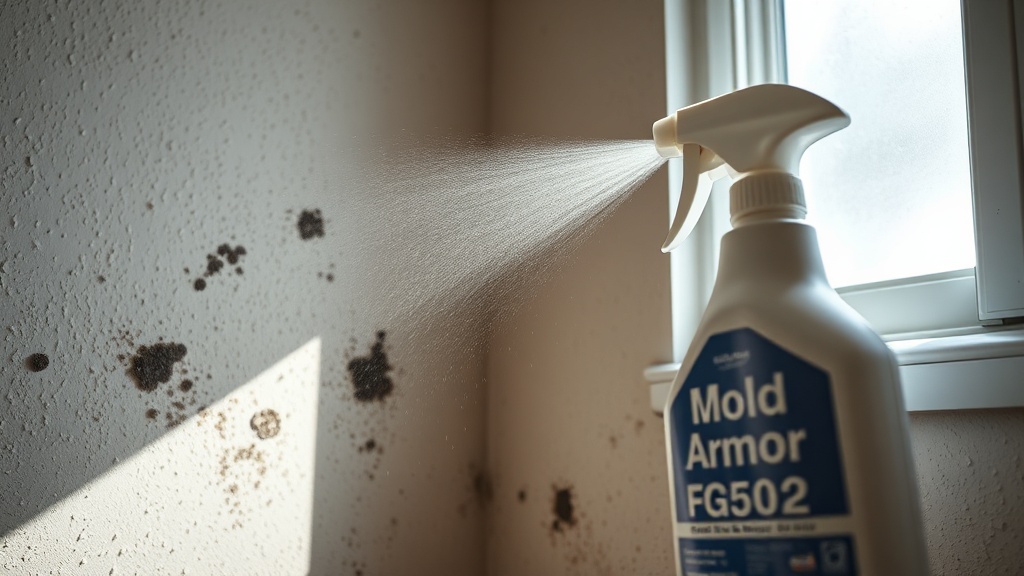
How to Remove Mold from Drywall with Mold Armor FG502: A Step-by-Step Guide
Mold on drywall is a common issue in humid basements, bathrooms, and kitchens, often appearing as dark spots that can quickly spread if left untreated. Mold Armor FG502 offers a potent, no-scrub solution that can eliminate mold and mildew stains from porous surfaces like drywall without the need for harsh scrubbing. This guide walks you through the entire process, from assessment to prevention, ensuring you use this product safely and effectively.
What Makes Mold Armor FG502 Different for Drywall?
Mold Armor FG502 is specifically formulated as a “no-scrub” mold killer, which is a critical advantage on drywall. Traditional bleach-based cleaners can damage the paper facing of drywall, leading to delamination and structural weakness. In contrast, FG502 uses a sodium hypochlorite and surfactant blend that penetrates mold spores without aggressive rubbing. This makes it suitable for painted or unpainted drywall where scrubbing could cause cosmetic damage. For a deeper dive into whether this product lives up to its claims, read our Mold Armor FG502 Mold Remover Review: Fast-Acting or Gimmick?.
How Should You Prepare the Drywall Area Before Applying FG502?
Proper preparation is essential for the product to work and to prevent cross-contamination. Follow these steps:
- Ventilate the room: Open windows and use fans to ensure fresh air circulation. The fumes from FG502 are strong and require proper ventilation.
- Remove loose debris: Gently brush or vacuum the affected area with a HEPA vacuum to remove loose dust and mold spores. Do not scrub; just lightly clean the surface. See our guide on Best HEPA Vacuum for Cleaning After Mold Armor FG502 Treatment for recommendations.
- Protect surrounding surfaces: Cover nearby furniture and floors with plastic sheeting. The product can bleach fabrics and wood finishes.
- Wear safety gear: Use rubber gloves, safety goggles, and an N95 mask to avoid inhaling spray mist or mold spores.
- Check for hidden moisture: Ensure the drywall is not actively wet. If it’s damp, address the source of moisture first (e.g., a leak or high humidity). Use a moisture meter to confirm the drywall is within safe limits (below 15% moisture content).
What Is the Correct Application Method for FG502 on Drywall?
Applying Mold Armor FG502 correctly maximizes its killing power while minimizing damage to the drywall. Follow this process:
- Shake the bottle well: Ensure the solution is thoroughly mixed for 30 seconds.
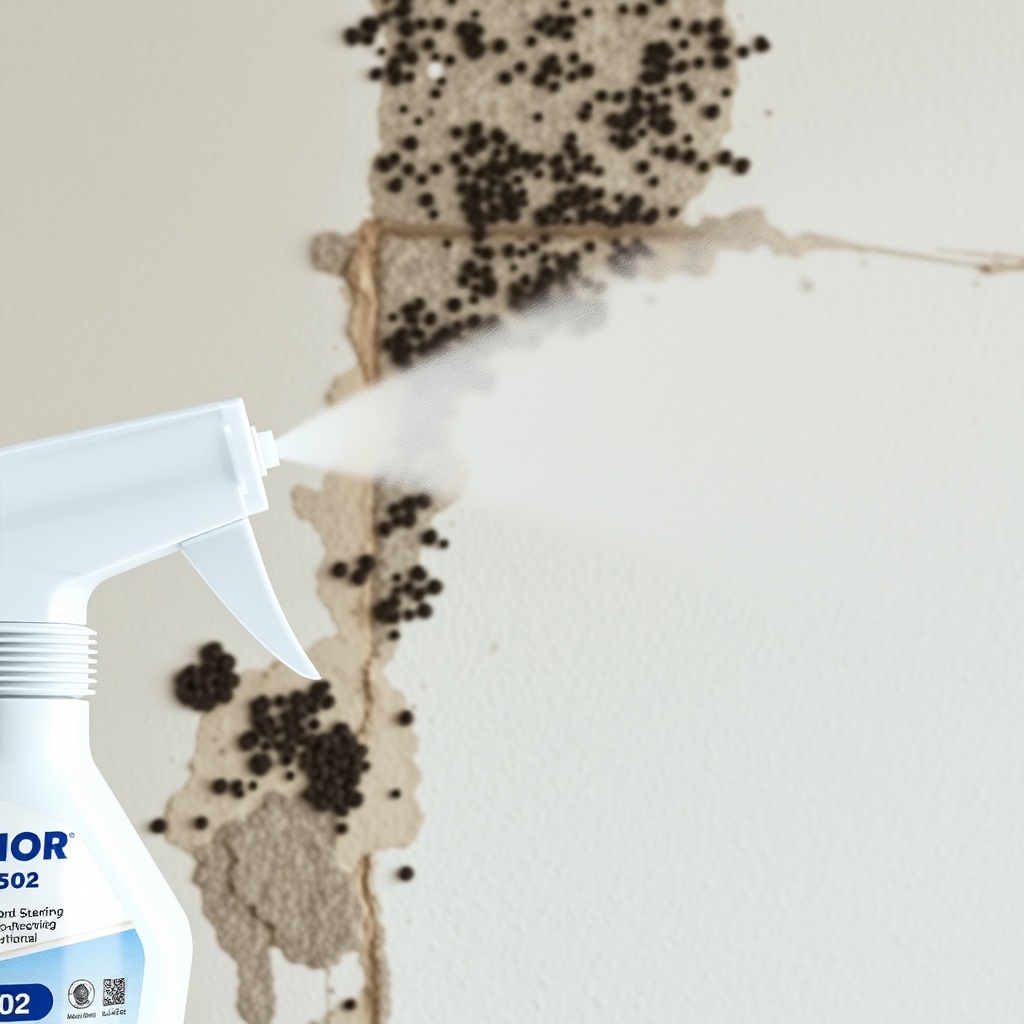
- Spray from a distance of 6–8 inches: Hold the nozzle about the length of a hand span away from the mold. Apply an even, moderate layer—too much can cause dripping and damage, too little may not kill deep spores.
- Allow dwell time: Leave the product on the mold for 5–10 minutes. Do not wipe or scrub during this period. The bleach-based formula will begin breaking down the mold’s cellular structure.
- Lightly agitate (if needed): If the mold is stubborn (e.g., black spots that have been present for months), you can gently use a soft-bristled brush after 10 minutes. Avoid heavy pressure.
- Blot, don’t rub: Use a clean, dry microfiber cloth to blot the area. Rubbing can push mold deeper into the drywall paper.
- Repeat if necessary: For heavy infestations, you may need a second application after 24 hours.
After treatment, adjust your indoor environment to prevent recurrence. Our guide on Dehumidifier Settings After Mold Armor FG502 Application: A Guide explains optimal humidity levels.
How Can You Assess Mold Severity on Drywall?
The severity of mold growth determines the approach. Use the table below to categorize the damage and decide if you can handle it yourself or need professional remediation.
| Severity Level | Appearance | Surface Area | DIY Feasible with FG502? | Professional Recommendation |
|---|---|---|---|---|
| Light | Small, scattered spots (less than 1 inch across) | Less than 10 sq ft | Yes | No |
| Moderate | Clusters of mold, may be darker (green/black) | 10–30 sq ft | Yes, with caution | Consider consulting a professional if underlying moisture is unknown |
| Heavy | Thick, fuzzy growth, potential structural weakness | Over 30 sq ft | No | Yes—possible hidden mold inside walls, risk of delamination |
What Should You Do After Applying FG502 to Drywall?
Post-application care ensures the mold stays gone and the drywall remains intact.
- Rinse (optional but recommended): After 24 hours, lightly mist the treated area with water and blot dry. This removes residual bleach that can yellow over time.
- Monitor for re-growth: Check the area weekly for 30 days. If mold returns, the issue is likely moisture-related rather than surface mold.
- Address humidity sources: Keep indoor relative humidity below 50% using a dehumidifier. In bathrooms, run an exhaust fan for 30 minutes post-shower.
- Seal the drywall: Once completely dry, apply a mold-resistant primer (e.g., Zinsser Mold Killing Primer) before repainting. This creates a barrier.
- Dispose of materials safely: Double-bag used rags and gloves in plastic bags and seal them before tossing in outdoor trash.
If you’re dealing with mold on carpets as well, we have detailed steps in our article How to Clean Mold from Carpet with Mold Armor FG502.
What Do Owners Say About Using FG502 on Drywall?
User reviews from online forums and product pages provide real-world insights. Many homeowners report that FG502 works quickly on bathroom drywall mold, often clearing visible stains within 10 minutes. One reviewer from a DIY forum noted: “I sprayed it on our basement drywall, waited 10 minutes, and the black streaks were gone. No scrubbing needed. It did leave a white residue, but a damp cloth wiped it off.” Another owner mentioned caution: “It worked, but the fumes are strong—make sure you have a fan and mask. Also, it bleached a small section of painted drywall where it dripped, so test in an inconspicuous spot first.” A third shared a mixed experience: “I used it on a 2-foot patch of mold near a leaky pipe. The mold died but came back in 3 months because I didn’t fix the leak first. The product itself was fine.” Overall, the consensus is that FG502 is effective for surface mold on drywall but not a substitute for fixing moisture problems.
Before making a purchase, read our comprehensive Mold Armor FG502 Buying Guide: What to Know Before You Buy to compare sizes and prices.
Frequently Asked Questions
Can Mold Armor FG502 be used on painted drywall?
Yes, but with caution. The bleach can dull or lighten paint, especially if left on for more than 15 minutes. Test on a hidden area first, and rinse off promptly after 10 minutes.
How long do I leave FG502 on drywall before wiping?
For best results, allow 5–10 minutes of dwell time. For heavy mold, up to 15 minutes. Do not let it dry completely, as this can leave residue. Blot, don’t scrub.
Will FG502 damage the paper facing of drywall?
If used correctly (with dwell time and no aggressive scrubbing), it should not damage the paper. However, if the drywall is already delaminating or soft from water damage, the product may worsen the condition. In such cases, replace the drywall.
Do I need to rinse FG502 off drywall after treatment?
Rinsing is optional but recommended. A light mist of water followed by blotting removes bleach residue and prevents potential yellowing. If you do not rinse, the residue may leave white streaks on dark surfaces.
How many square feet can a 32 oz bottle of FG502 cover on drywall?
Typically, a 32 oz bottle covers about 25–30 square feet of drywall with a light to moderate application. For heavy mold, coverage drops to 15–20 square feet. Always double-check for even coverage.
Does FG502 kill black mold (Stachybotrys chartarum) on drywall?
Yes, the active ingredients (sodium hypochlorite) are effective against black mold on non-porous and semi-porous surfaces like drywall. However, because black mold often grows deep inside porous drywall, the surface may appear clean while roots remain. Monitor for re-growth and address underlying moisture.