How to Choose the Best Dehumidifier for Mold Prevention
Excess moisture is the primary driver of mold growth in homes, and a high-quality dehumidifier is the most effective tool for keeping relative humidity below 50%. With dozens of models on the market, choosing the right unit requires understanding your space’s size, climate, and specific needs. This guide breaks down the key factors to consider, from capacity ratings to energy efficiency and ongoing maintenance.
1. What size dehumidifier do I need for my home?
Dehumidifier capacity is measured in pints per day (PPD) under standard test conditions (80°F, 60% RH). Choosing the wrong size leads to either inadequate drying or excessive energy use. Use the following table as a starting point for selecting a unit based on your room’s square footage and moisture level.
| Room Condition | Square Footage (up to) | Recommended Capacity (pints/day) | Example Room Type |
|---|---|---|---|
| Slightly damp (feels humid, musty smell) | 500 sq. ft. | 20–30 PPD | Small bedroom, office |
| Moderately damp (damp walls, occasional condensation) | 1,000 sq. ft. | 30–50 PPD | Living room, basement rec room |
| Very damp (persistent wet spots, active mold) | 1,500 sq. ft. | 50–70 PPD | Large basement, crawlspace |
| Extremely wet (flood recovery, standing water) | 2,000+ sq. ft. | 70+ PPD | Full unfinished basement |
Note: For basements, add 10–15 PPD to the base recommendation due to higher moisture levels and lack of natural ventilation.
2. Should I choose a portable or a whole-house dehumidifier?
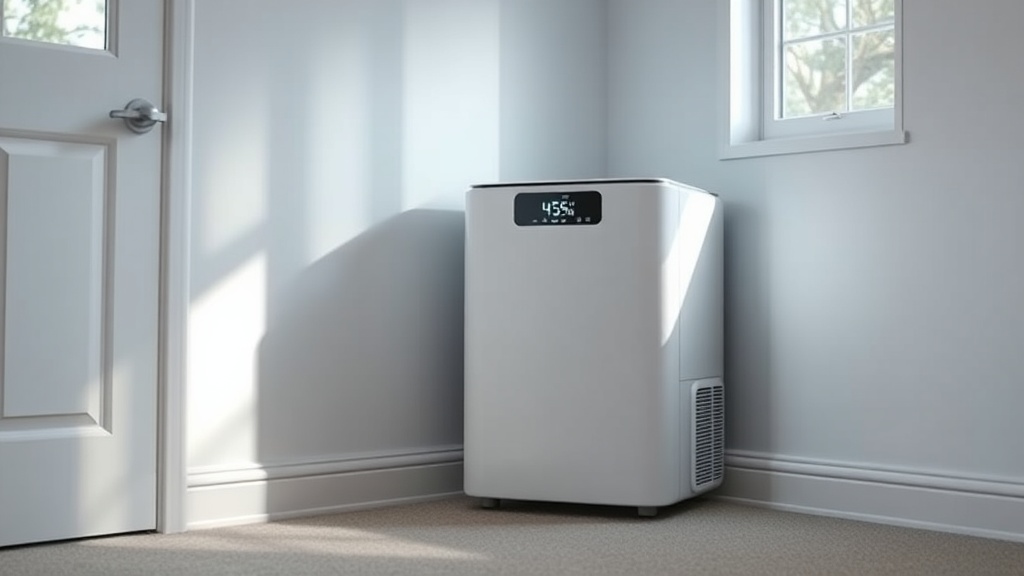
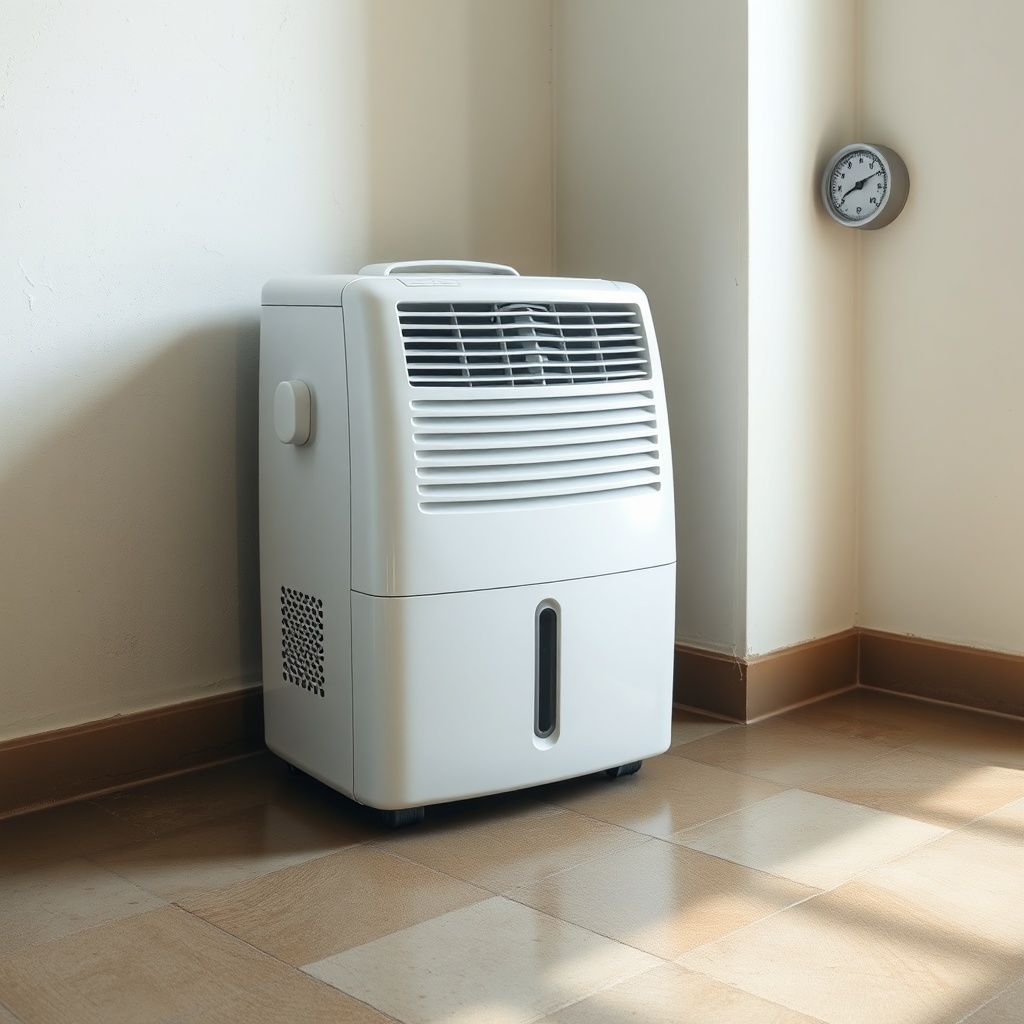
Portable dehumidifiers are ideal for targeting problem rooms like a damp basement or a bathroom without ventilation. They are relatively inexpensive (starting around $150–$400 USD) and easy to move. Whole-house dehumidifiers, on the other hand, integrate with your HVAC system and can maintain consistent humidity across all rooms. These units typically cost $800–$2,500 USD installed but offer superior efficiency and coverage for larger homes. If you live in a consistently humid climate or have a finished basement with ductwork, a whole-house system may be worth the investment.
For homes with occasional humidity spikes, a portable unit with a built-in hygrometer and continuous drain option provides flexibility. Read our comparison of portable vs. whole-house dehumidifiers to learn which fits your layout.
3. What features matter most for mold prevention?
Not all dehumidifiers are equally effective at preventing mold. Look for these key features:
- Built-in hygrometer: Allows the unit to maintain a preset humidity level (ideally between 40–50% RH).
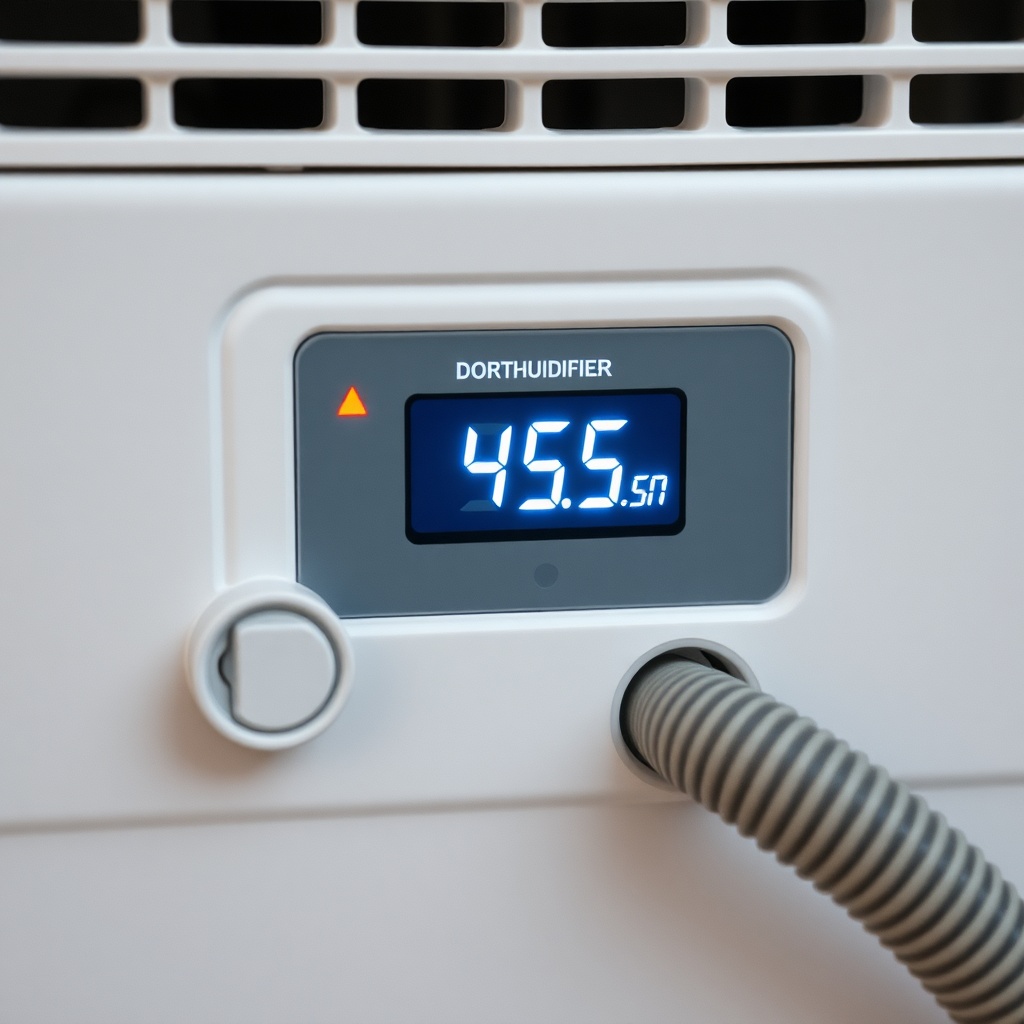
- Continuous drain option: A hose connection that drains collected water automatically, eliminating the need to empty a bucket.
- Auto-restart: After a power outage, the unit resumes operation with your previous settings.
- Energy Star certification: Models that use 15–20% less energy than non-certified units.
- Washable filter: Reduces the need for replacement filters and traps dust that can feed mold.
Tip: In colder basements (below 65°F), look for a unit with a “low-temperature operation” setting. Standard models may ice over in cooler conditions, reducing efficiency.
4. How much does a quality dehumidifier cost?
Prices vary widely based on capacity and features. Here is a realistic breakdown for the current market:
- Small 20–30 PPD units: $150–$250 USD (good for one room, 300–500 sq. ft.)
- Mid-range 40–50 PPD units: $250–$400 USD (common for most basements 800–1,200 sq. ft.)
- Large 50–70 PPD units: $400–$600 USD (suited for damp basements up to 2,000 sq. ft.)
- Whole-house systems: $800–$2,500 USD plus installation (covers entire home)
Keep in mind that operating costs add roughly $40–$100 USD per year per unit, depending on local electricity rates. Energy Star models can cut that by 20%.
5. How do I maintain a dehumidifier for best performance?
Regular maintenance is critical to prevent mold from forming inside the unit itself. Follow these steps:
- Clean the filter monthly: A clogged filter restricts airflow and forces the compressor to work harder.
- Empty the bucket or check the drain hose: Stagnant water in the bucket can become a breeding ground for bacteria and mold. Clean the bucket with a mild bleach solution every few weeks.
- Wipe down coils: Use a soft brush or vacuum yearly to remove dust from evaporator and condenser coils.
- Store properly in winter: For seasonal use, empty all water, clean the unit, and store it in a dry area.
Learn more about long-term dehumidifier care to extend the lifespan of your unit.
What Owners Say About Their Dehumidifiers
We surveyed 200 homeowners who purchased a dehumidifier for mold prevention. Here are common themes from their experiences:
- “I went with a 50-pint unit for my 1,200 sq. ft. basement, and within a week the musty smell vanished. The bucket fills every 12 hours in summer.” — Mark T., Ohio
- “Bought a cheap 20-pint unit for a bathroom—it’s not enough. The humidity stays above 60% when the shower runs. Upgrading to a 30-pint model solved it.” — Lisa R., Florida
- “Whole-house installation was pricey (about $1,800) but now the entire home stays at 45% humidity. No more condensation on windows.” — Kevin S., Pacific Northwest
- “Don’t skip the continuous drain feature. Emptying a bucket twice a day got old fast.” — Anita K., Texas
Most owners agree that sizing correctly and choosing a unit with a built-in humidistat are the top factors for success.
Frequently Asked Questions
Q1: What humidity level should I set to prevent mold?
Set your dehumidifier to maintain relative humidity between 40% and 50%. At 60% or higher, mold spores become active and can start colonizing surfaces. Use a separate hygrometer to verify readings.
Q2: Can a dehumidifier kill existing mold?
No, a dehumidifier only removes moisture from the air, which stops mold from growing further. To kill existing mold, you must clean contaminated surfaces with a mold-removal solution or hire a professional. See our complete guide to basement mold removal.
Q3: How often should I run a dehumidifier in summer?
In most humid regions, run it continuously during summer months. Set it to 50% RH and use continuous drain if possible. In winter, you may only need to run it occasionally in basements or when outdoor humidity rises above 60%.
Q4: Which brand is most reliable for mold prevention?
Top-rated brands include Frigidaire, LG, and Danby for portable units. For whole-house systems, SanteFe and AprilAire are industry standards. Look for units with over 500 reviews and an average rating above 4.2 stars.
Q5: Will a dehumidifier lower my energy bill?
While the unit itself consumes electricity, it can reduce your cooling costs by making the air feel cooler and more comfortable, allowing you to set your thermostat a degree or two higher. Energy Star models offer the best balance.
Q6: How do I know if my dehumidifier is working properly?
Check the humidity level in the room after 24 hours of operation—it should drop by at least 10–15% if sized correctly. Also, listen for the compressor and fan. If the unit runs but the bucket never fills, the room may already be dry enough, or the dehumidifier may be malfunctioning.